This page dedicated to Holly Zech for all her help
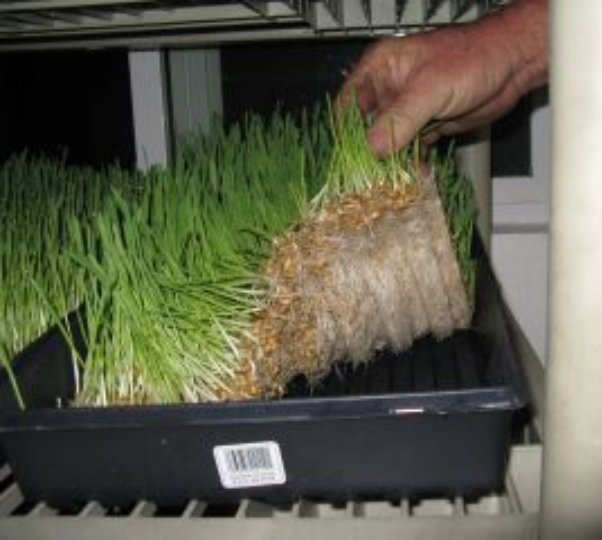
2012 School Internship project
April Inventor at work. The pump isn't working out - need a larger more powerful pump.
MAY - Pump solved, timer solved and working. Redesigned and working. Now to get the right quantity of seed for each tray and the water to water the whole tray.
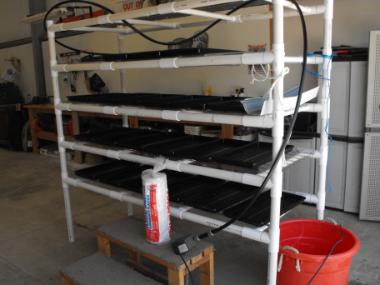
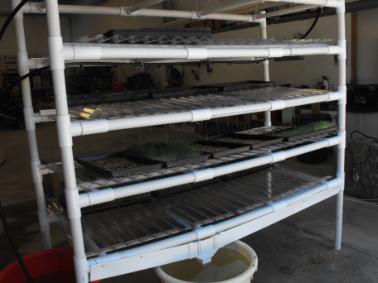
Top model failure...water ran towards the bucket. I redesigned for the water to run toward the bucket in the second picture. Each shelf...water ran towards the bucket. Each shelf drips onto the shelf below. The top two shelves each with 6 sprinklers heads with 8 inch diameter sprinkles and drips onto the shelf below. The top two shelves each with 6 sprinklers heads with 8 inch diameter sprinkles.
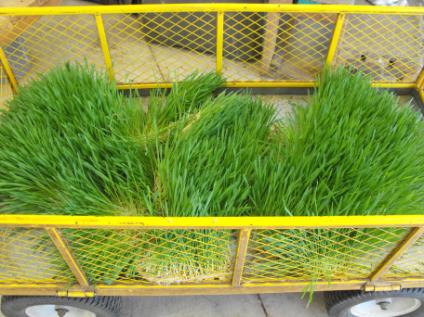
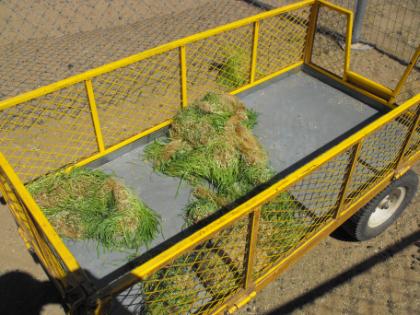
Well I guess they liked the fodder, what wasn't to like succulent greens in the desert. At first the alpacas did not know what to think till I sprinkled watered down mallasses mixture over the top of the fodder.
To Fodder or Not to Fodder
Typically livestock eat hay that was grown in a field. I wonder if fodder is an alternative for part of the feed rations of livestock. What does it take to grow feed? How does the nutrition of fodder compare to field grown hay? What kind of work is involved, and what does it cost me or the environment?
Field grown crops have been harvested for thousands of years. Cows, horses, and goats, flourish on baled hay and it is their main food source unless pastured. Pastured livestock eat field crops that haven’t been baled yet. Baling makes storage and transportation easier. Fields of hay take a lot of land and expensive heavy machinery like combines and balers to produce crops. Heavy machines use costly oil and fuel causing carbine emissions. The need for chemical fertilizers and weed killers to grow the field crop is also environmentally unfavorable. While it takes seven acre feet of water to grow field crops here in the desert, it is possible to get as many as seven cuttings of hay during that same year.
Field grown hay should be dried at five percent moisture to protect against mold in order to safely store it. Stored hay takes space and needs to be managed to keep its quality. Nutrients are lost with age so hay is stored for less than a year.
The cost of trucking to the feed stores has to be figured in and passed on to the consumer. Not only do you need the entire infrastructure of the farm but experience is necessary. A field can grow for many years with knowledge of heavy equipment and the right management techniques. All these costs have to be figured in so the farmer can be profitable. I hope he does make a profit because a one hundred pound bale can cost theconsumer from fifteen to over twenty dollars. It irks me to see my animals pick through, stomp on and otherwise waste the hay high dollar hay.
Fodder is seed grown with hydroponics. A hydroponics system is usually stacked trays of seed producing the ‘biscuits’ of roots and blades. The biscuit grows to the height of four to six inches and completes a cycle of growth within six to eight days. Livestock love the fresh, moist, tender spring like sprouts and consume roots and all. The biscuits are higher in nutrients than the above mentioned bales of hay as they are young and fresh.
Once you have a fodder system a timer makes the foremost job of misting easy. Fodder does not need nutrients added to the water because the seed has nutrients enough for the short growth period. No combines, balers or transportation is needed to grow fodder. There is no soil so no weeds. No chemicals are used except bleach to clean the trays as mold can be a problem. Extremely perishable and not easily stored fodder is best grown on site. Only a little energy is needed to run water pumps, lighting if needed, and the timer. Music is nice company while stocking and cleaning the trays yourself. One person can manage many tons if they had a fodder set up that large. Ten, fifteen pound biscuits cost less than two dollars and fifty cents. True it is heavy with water but that is part of its delicious palatably. Livestock eat root and all, there is no waste.
I believe fodder is an excellent supplement to baled hay. The nutrients are higher the price lower while it is good for the environment. It may not be as convenient as purchasing bales from providers but savings help me to provide for my animals. It is less expensive, good for the environment, and has better nutrition. Fodder will never replace bales or pastures as the animals need the roughage to masticate and we still need the seed.